

From detector to fire department
How a fire signal travels, and what the panel does on the way.
Fire code path
Initiating device, panel, notification, auxiliary functions, monitoring. The listed panel owns the decision, and the submittal package is prepared before work starts.
Inside fire and life-safety work
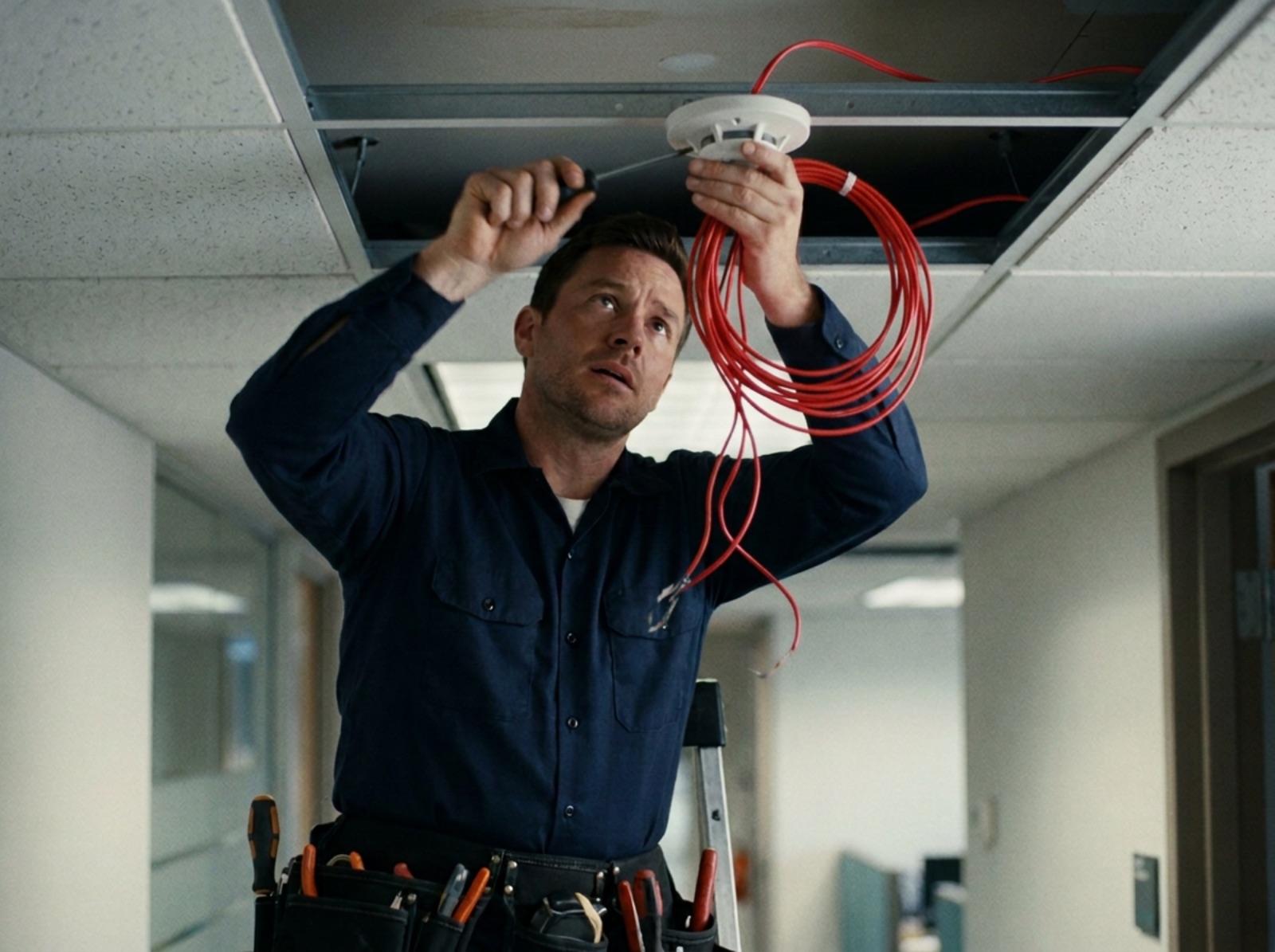
Door and motion sensors
Contacts on perimeter doors and motion detection sized to the room, with pet- and HVAC-aware placement.
Glass-break detection
Acoustic or shock sensors covering storefront glass and ground-floor windows.
Keypads and panels
Keypads at the doors people use, panels in the closet, partitions for tenants or departments.
Optional 24/7 monitoring
Central-station monitoring with your call list and escalation, added only if you want it.
Fire alarm systems
Fire alarm installation coordinated with the project’s fire protection design where a project calls for it.
Scope of a typical alarm & fire engagement
- 24/7 central station monitoring
- Fire alarm design, installation & inspection support
- Verified alarms to cut false dispatches
- Panic and duress devices
- Environmental: temp, water, power
- Certificate-of-occupancy support

Fire alarm work built around the approved design
Fire alarm scope is set by the building’s occupancy, its approved fire protection design and the authority having jurisdiction, not by a package. We work from approved drawings or with the project’s fire protection designer, and confirm device locations, notification coverage and interfaces before installation starts.
Every device is installed, programmed and tested against the design. Interfaces such as sprinkler supervision, door release, elevator recall and HVAC shutdown are tested where the design requires them, and results are recorded device by device for your files, your insurer and the fire marshal.

Fire alarm, monitoring and the inspection record
Fire alarm work is code work. Devices, spacing, notification and annunciation follow the applicable code and the authority having jurisdiction, and the submittal package is prepared so approval is not the thing that delays the project. Integration with access control is designed in so egress releases correctly and elevators recall as required.
Monitoring runs to a central station with documented response procedures and a contact tree that is actually current. Inspection and testing are scheduled rather than remembered, with records kept so an inspector, an insurer or a corporate audit can be answered from a file instead of a memory.
Fire alarm platforms we work with
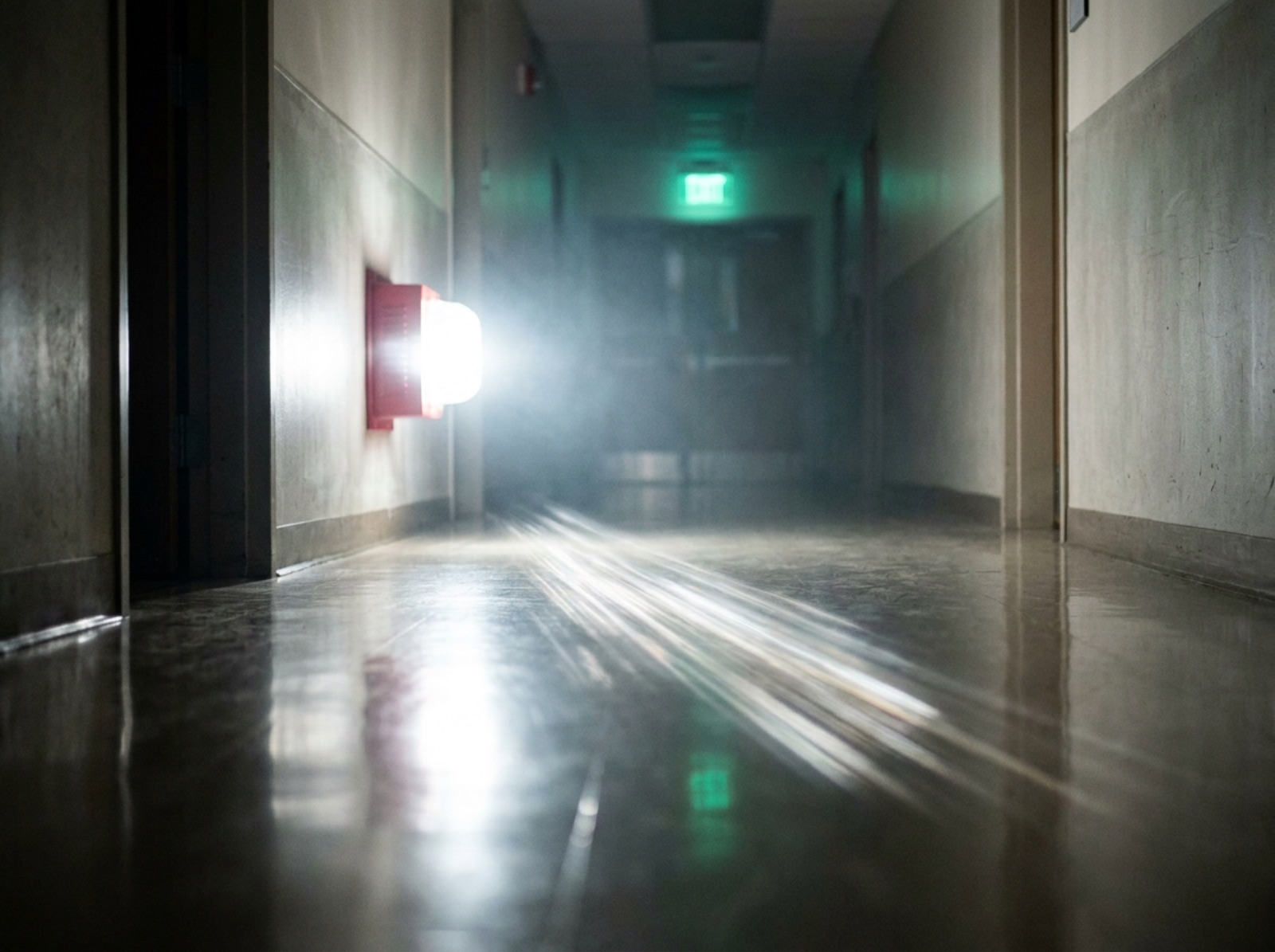
DMP
COMMERCIAL INTRUSIONUS-made panels with a reputation for reliability in banks and government — our pick for serious commercial intrusion.
Qolsys IQ
SMART PANELSTouchscreen panels with encrypted sensors — the modern standard for small business and mixed-use.
Alarm.com
MONITORING & APPThe service layer on top: app control, alerts, video verification, and cellular paths that survive cut lines.
Honeywell / Resideo
PROVEN PANELSDecades-deep install base and parts availability — what we service, take over, and extend every week.
Silent Knight & Fire-Lite
ADDRESSABLE FIREHoneywell fire panels — addressable systems the AHJ knows on sight.
Potter
FIRE & SPRINKLERFire panels and sprinkler-monitoring devices — the standard for supervising waterflow and tamper.
Alarm & Fire, done the long-term way
What to confirm for alarm & fire work across Allentown, Bethlehem, Easton, Reading and the wider Lehigh Valley.
Planning fire alarm and life-safety work
Fire alarm work is coordinated with the building’s fire protection design and the authority having jurisdiction. Scope is set by the building and its approvals, not by a package.
What sets the scope
- Building size, occupancy type and the devices the approved design calls for
- New system, expansion of an existing panel, or replacement
- Ceiling heights, access and finished surfaces for device and cable installation
- Monitoring connection and communicator type
- Integration with sprinkler supervision, elevator recall, door release or HVAC shutdown where required
- Inspection, testing and documentation schedule
Existing fire panels
Many existing panels can be expanded or connected to new monitoring rather than replaced. Whether that is allowed depends on the panel, its listing and the approved design, so we confirm it during the survey and with the project’s fire protection designer before quoting.
Before anything is priced
- Existing panel, devices and their condition
- Approved drawings or the design path for new work
- Monitoring arrangement and communicator
- Interfaces with sprinkler, doors, elevators and HVAC
Records you can show
- Devices tested and results documented
- Monitoring signals confirmed at the central station
- Inspection and test records organized for your files, insurer and AHJ
- Device list and panel programming records
How fire alarm work is coordinated
An alarm nobody sets protects nothing. We zone the building by how it is used, put keypads at the doors staff actually walk through, and give each person their own code.
Do we have to have monitoring?
No. Monitoring is optional and can be added later.
Can different tenants arm separately?
Yes. Partitions let each tenant or department arm its own area.
Do you install fire alarm systems?
Yes, on projects that call for them, coordinated with the project’s fire protection design.
Fire and life-safety questions
Why does our current alarm keep false-tripping?
Usually configuration rather than hardware: a schedule that does not match how the building operates, a sensor aimed at a door that opens early, or staff never trained on the keypad. We re-survey and reconfigure before recommending equipment.
Do you provide 24/7 monitoring?
Yes, to a central station with documented response procedures, dual signal paths, and a contact tree kept current.
Do you handle fire alarm inspection and testing?
Yes. Inspection and testing are scheduled and documented so records exist for the AHJ, your insurer and internal audits.
Can alarms be verified before police are dispatched?
Yes. Alarm events can be linked to a camera view for verification, and audio talk-down is available for after-hours deterrence.
Tell us about the building. We will call you back within one business day.
A short walkthrough, then a line-item proposal. No packages, no pressure. Local crews across the Lehigh Valley, Berks, Bucks, Montgomery, Philadelphia and NJ.
Or call +1 484-800-1220