Credential to strike
The reader identifies the credential. The controller checks permission, unlocks the door and logs what happened.
Four pieces of the decision, from the phone in a pocket to the strike in the frame.
A 150m geofence wakes the app, BLE range pairs the phone to the reader, and a deliberate action supplies intent — but the on-premise controller makes the decision, so the door works without the internet.
The reader identifies the credential. The controller checks permission, unlocks the door and logs what happened.
Exit, fire release and lockdown are designed together. Lockdown secures entry while preserving the way out.
Every badge event carries the clip from that door’s camera, so a denied card or a forced door is one click from the footage.
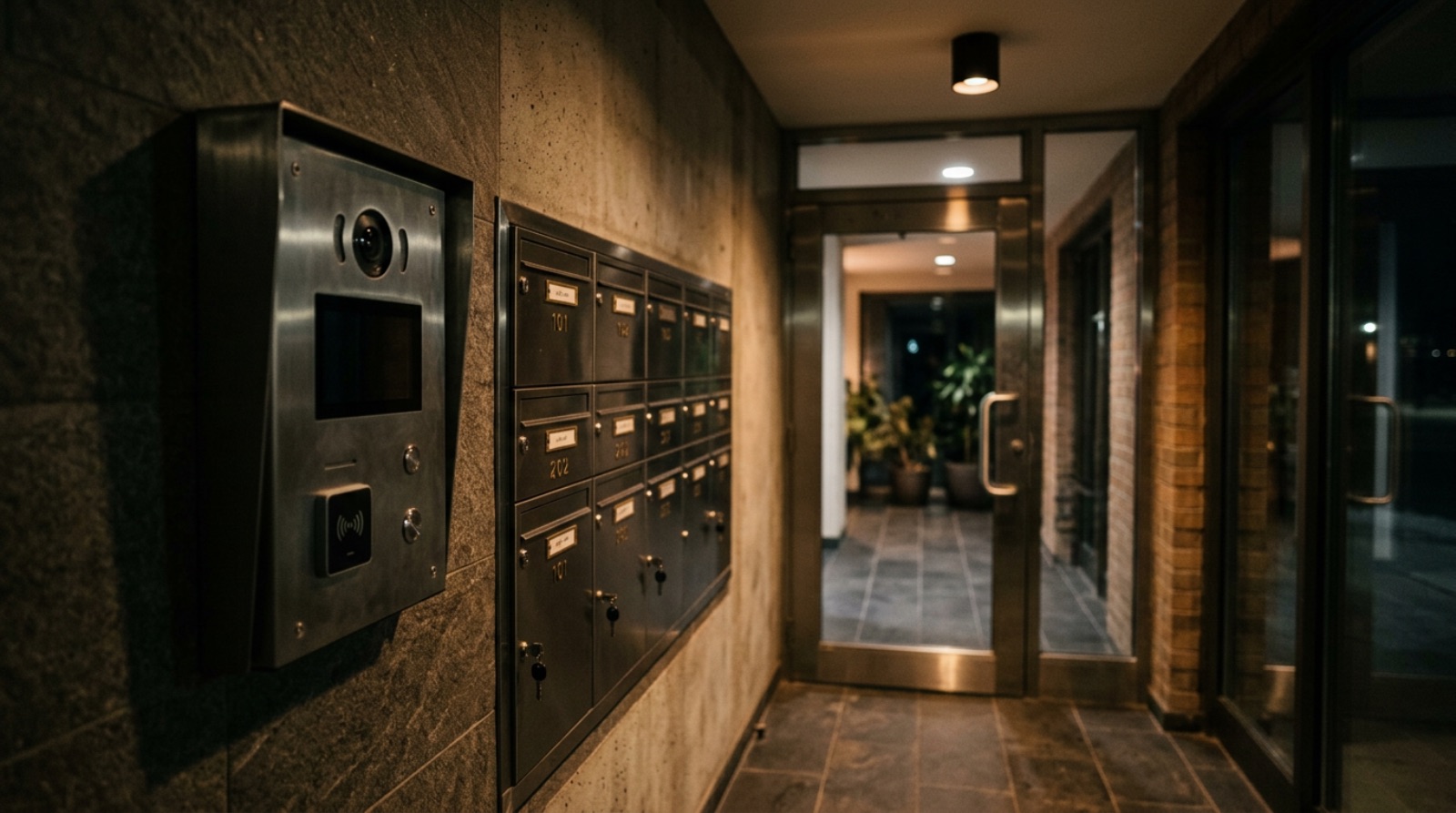
Proximity, smart-card and phone-based readers at each controlled door, with multi-technology readers where you are migrating.
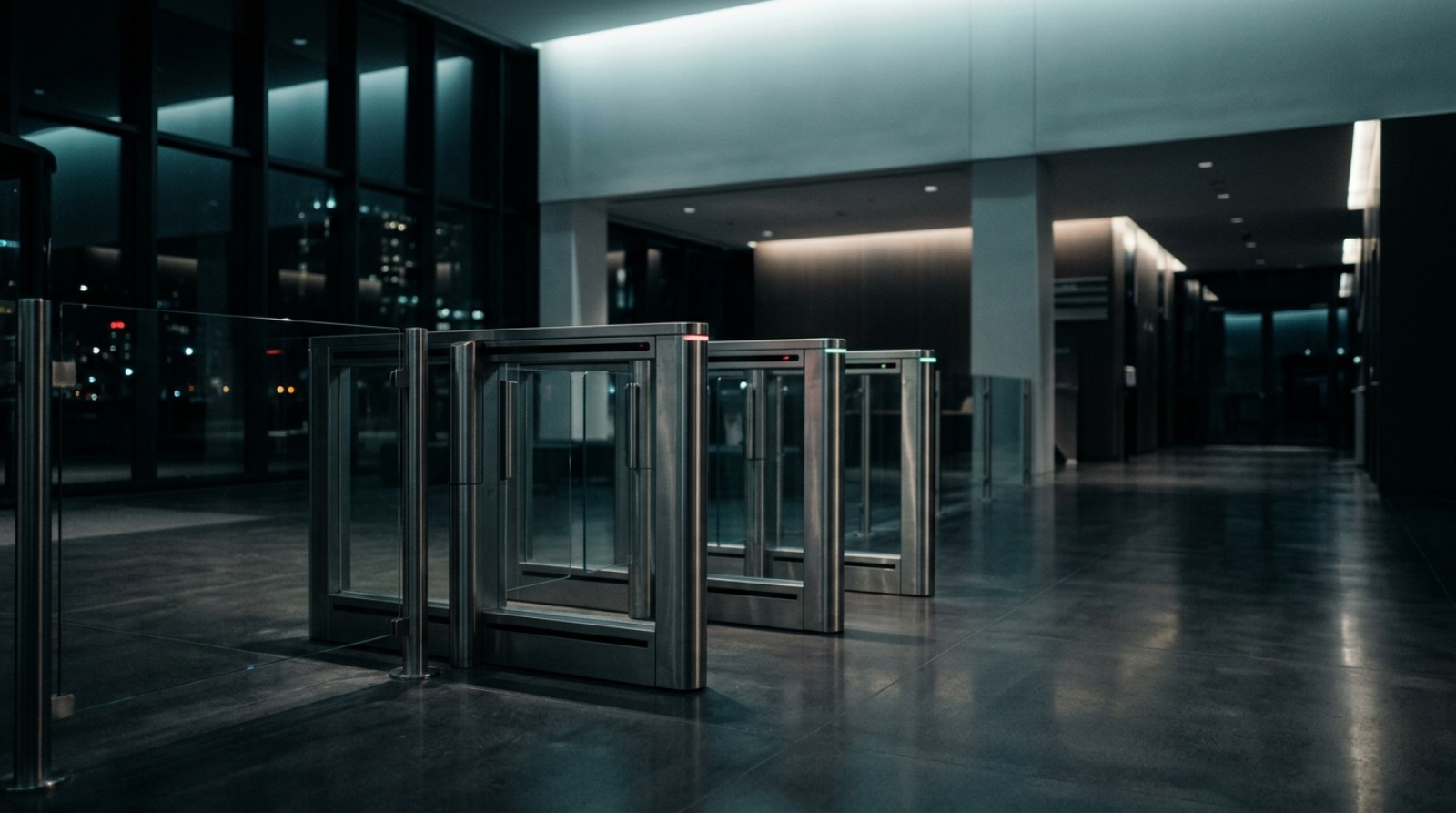
Electrified hardware matched to the door, frame and egress requirements, with request-to-exit and door position on every opening.
Local or cloud-connected controllers that keep doors working when the network does not.
Schedules, groups and expiring credentials managed from one place, by your staff or by us.
Floor-by-floor permissions that ride the credential, for buildings with tenant floors or restricted levels.
The design question is not which reader to buy, it is who should be able to open what, when, and who can prove it afterwards. We build a door schedule first: every controlled opening, its hardware, its schedule, its exceptions and its failure mode. Staff turnover, contractors, deliveries, after-hours cleaning and emergency responders each need a defined path. Mobile credentials suit sites with high turnover because provisioning and revocation cost nothing; cards and fobs still make sense where phones are impractical on the floor.
Door hardware is half the system and the half most often specified badly. Electric strikes, mag locks, electrified exit devices and door position monitoring each behave differently under abuse, and the wrong choice shows up as a door that drags, a strike that fails in six months, or an opening that does not latch. We specify the mechanical side with the electronic side, and we plan pathways in masonry, glass storefront and hollow metal frames before the schedule is priced.
Egress compliance is designed in from the start. Controlled doors release correctly on alarm, delayed egress is used only where code permits it, and the interface to the fire alarm is documented so the annual inspection has something to check against. Getting this wrong is the fastest way to fail an inspection or, worse, to trap someone.
Audit trails only matter if they hold up later. We configure logging so an opening can be tied to a credential and to a camera view of the same second, retention on those records is set to a policy rather than a default, and reports are simple enough that an office manager will actually run them. Lockdown is set up and rehearsed: one action, every door, a known state.
On multi-building and multi-tenant properties, administration is the deciding feature. Cloud-managed platforms let a property manager issue or revoke a credential from a browser, delegate per-site permissions to on-site staff, and standardize schedules across locations. Where a legacy panel is worth keeping, we integrate rather than replace, and where a landlord and a tenant both need control, we separate the two authorities cleanly rather than sharing one login.
The most mature cloud access platform — deep multifamily and commercial integrations and rock-solid mobile credentials.
Cloud access with wireless door controllers — the practical answer for garages, gates, and retrofits where pulling cable is brutal.
Touchless, phone-in-pocket entry with a clean admin console — the modern-office favorite.
The industry standard for secure credentials — Seos fobs, mobile IDs, and readers that work across platforms.
Electrified locks, exit devices, and strikes — the mechanical half of access control, specified and installed correctly.
What to confirm for access control work across Allentown, Bethlehem, Easton, Reading and the wider Lehigh Valley.
Doors are where access projects get expensive or stay simple. The survey decides the hardware for each opening before anything is priced.
Existing readers, controllers and card populations can often be kept or migrated in phases instead of replaced on day one. We identify the card format and controller platform during the survey and lay out what can stay, what can be bridged and what has to change.
A controlled door is a card reader, an electrified crash bar and a door position switch, specified together and matched to the door and its egress requirements.
Hardware, frame, egress path and power recorded for every opening.
Reader, lock type, controller and fail-secure or fail-safe behaviour, door by door.
Hardware fitted, schedules and groups built to how the building is used.
Admin training, credential enrolment and an audit report you can run yourself.
Often, yes. Multi-technology readers accept existing cards during a migration.
Each door behaves as specified: fail-secure or fail-safe, decided per opening with life-safety requirements.
Yes. Credentials can expire on a date or work only on a schedule.
Immediately, from a browser or phone, on any cloud-managed platform we install. That is the core argument against keys: a key that walked out cannot be recalled.
It has to be designed for it. Controlled doors release on alarm, delayed egress is used only where code permits, and the fire alarm interface is documented for inspection.
Sometimes. We assess the panel, readers, credentials and cabling before recommending a replacement. For an access control upgrade, bring your existing platform and card details, a list of controlled doors, and the access schedules you need. The survey checks door hardware and cable routes as well as compatibility. Ask the proposal to separate equipment that can stay, equipment that must change, credential migration and staff training.
Yes. One platform, one credential set, per-site permissions for local staff, and standardized schedules across every location.
A short walkthrough, then a line-item proposal. No packages, no pressure. Local crews across the Lehigh Valley, Berks, Bucks, Montgomery, Philadelphia and NJ.
Or call +1 484-800-1220Four pieces of the decision, from the phone in a pocket to the strike in the frame.
Your phone connects to the reader. The local controller checks permission, even when the internet is down.
The reader identifies the credential. The controller checks permission, unlocks the door and logs what happened.
Exit, fire release and lockdown are designed together. Lockdown secures entry while preserving the way out.
Every badge event carries the clip from that door’s camera, so a denied card or a forced door is one click from the footage.
Proximity, smart-card and phone-based readers at each controlled door, with multi-technology readers where you are migrating.
Electrified hardware matched to the door, frame and egress requirements, with request-to-exit and door position on every opening.
Local or cloud-connected controllers that keep doors working when the network does not.
Schedules, groups and expiring credentials managed from one place, by your staff or by us.
Floor-by-floor permissions that ride the credential, for buildings with tenant floors or restricted levels.
The design question is not which reader to buy, it is who should be able to open what, when, and who can prove it afterwards. We build a door schedule first: every controlled opening, its hardware, its schedule, its exceptions and its failure mode. Staff turnover, contractors, deliveries, after-hours cleaning and emergency responders each need a defined path. Mobile credentials suit sites with high turnover because provisioning and revocation cost nothing; cards and fobs still make sense where phones are impractical on the floor.
Door hardware is half the system and the half most often specified badly. Electric strikes, mag locks, electrified exit devices and door position monitoring each behave differently under abuse, and the wrong choice shows up as a door that drags, a strike that fails in six months, or an opening that does not latch. We specify the mechanical side with the electronic side, and we plan pathways in masonry, glass storefront and hollow metal frames before the schedule is priced.
Egress compliance is designed in from the start. Controlled doors release correctly on alarm, delayed egress is used only where code permits it, and the interface to the fire alarm is documented so the annual inspection has something to check against. Getting this wrong is the fastest way to fail an inspection or, worse, to trap someone.
Audit trails only matter if they hold up later. We configure logging so an opening can be tied to a credential and to a camera view of the same second, retention on those records is set to a policy rather than a default, and reports are simple enough that an office manager will actually run them. Lockdown is set up and rehearsed: one action, every door, a known state.
On multi-building and multi-tenant properties, administration is the deciding feature. Cloud-managed platforms let a property manager issue or revoke a credential from a browser, delegate per-site permissions to on-site staff, and standardize schedules across locations. Where a legacy panel is worth keeping, we integrate rather than replace, and where a landlord and a tenant both need control, we separate the two authorities cleanly rather than sharing one login.
The most mature cloud access platform, deep multifamily and commercial integrations and rock-solid mobile credentials.
Cloud access with wireless door controllers, the practical answer for garages, gates, and retrofits where pulling cable is brutal.
Touchless, phone-in-pocket entry with a clean admin console, the modern-office favorite.
The industry standard for secure credentials, Seos fobs, mobile IDs, and readers that work across platforms.
Electrified locks, exit devices, and strikes, the mechanical half of access control, specified and installed correctly.
What to confirm for access control work across Allentown, Bethlehem, Easton, Reading and the wider Lehigh Valley.
Doors are where access projects get expensive or stay simple. The survey decides the hardware for each opening before anything is priced.
Existing readers, controllers and card populations can often be kept or migrated in phases instead of replaced on day one. We identify the card format and controller platform during the survey and lay out what can stay, what can be bridged and what has to change.
A controlled door is a card reader, an electrified crash bar and a door position switch, specified together and matched to the door and its egress requirements.
Hardware, frame, egress path and power recorded for every opening.
Reader, lock type, controller and fail-secure or fail-safe behaviour, door by door.
Hardware fitted, schedules and groups built to how the building is used.
Admin training, credential enrolment and an audit report you can run yourself.
Often, yes. Multi-technology readers accept existing cards during a migration.
Each door behaves as specified: fail-secure or fail-safe, decided per opening with life-safety requirements.
Yes. Credentials can expire on a date or work only on a schedule.
Immediately, from a browser or phone, on any cloud-managed platform we install. That is the core argument against keys: a key that walked out cannot be recalled.
It has to be designed for it. Controlled doors release on alarm, delayed egress is used only where code permits, and the fire alarm interface is documented for inspection.
Sometimes. We assess the panel, readers, credentials and cabling before recommending a replacement. For an access control upgrade, bring your existing platform and card details, a list of controlled doors, and the access schedules you need. The survey checks door hardware and cable routes as well as compatibility. Ask the proposal to separate equipment that can stay, equipment that must change, credential migration and staff training.
Yes. One platform, one credential set, per-site permissions for local staff, and standardized schedules across every location.
A short walkthrough, then a line-item proposal. No packages, no pressure. Local crews across the Lehigh Valley, Berks, Bucks, Montgomery, Philadelphia and NJ.
Or call +1 484-800-1220